Can Eye Exercises Improve Vision?
Can Your Eyes Get Better?
Most people assume vision only goes one direction. It gets worse, you get stronger glasses, repeat. Nobody really questions it.
But here is something worth sitting with: if the eyes can deteriorate in response to how we live and how we use them, why couldn't they also improve?
I've been thinking about this for a while, and the research is more interesting than the standard story suggests.
Let's start with what's true and clear. The structural shape of the eye, the curvature that determines whether you're nearsighted or farsighted, cannot be changed through exercise. A 2024 study out of Wenzhou Medical University confirmed this directly: eye exercises did not change refractive error or uncorrected visual acuity. So if someone is selling you a program that promises to eliminate your prescription, that's not what the evidence supports.
What the evidence does support is more nuanced and, I think, more interesting.
Vision is not just a structural event. It's a neurological one. The National Eye Institute convened a workshop in 2024 specifically on visual neuroplasticity, identifying multiple mechanisms by which the visual system retains adaptive capacity across the retina, the cortex, and the pathways in between. The same Wenzhou study that found no change in refractive error found significant improvements in accommodative function and measurable reductions in visual fatigue through consistent eye exercise practice over nine months.
What that means practically: the muscles that control focus, the coordination between your two eyes, the ease with which your visual system shifts between near and far, these are functional capacities. They respond to how you use them. They deteriorate when you stop using their full range, which is exactly what hours of close screen work does every day. A visual system locked at fourteen inches for eight hours is like any other system that never gets to move through its full range of motion. It loses what it doesn't use.
This is where the Tibetan eye chart comes in. Tibetan medicine has used this practice for centuries, and peer-reviewed research on ocular muscle training has found measurable improvements in eye coordination, convergence, and fatigue reduction through methods like it. The chart is a circular design with radiating patterns extending outward from a central point. The practice is simple and takes only a few minutes.
How to use it:
Print the chart and hold it at eye level, roughly arm's length away. Sit comfortably with your head still. Begin by softening your gaze at the central point. Then slowly trace the patterns outward from the center, following the design with your eyes while keeping your head still. Let your eyes move through the full range of the chart, toward the edges, into the corners, following the natural flow of the design. Move slowly and deliberately. Breathe. When you reach the outer edge, come back to center and begin again. A few minutes of this daily is enough.
What you're doing is taking your extraocular muscles through ranges of motion they almost never get in ordinary screen-centered life. You're training the accommodative system to shift and adjust. You're asking the neurological pathways that govern eye movement to work with intention rather than defaulting to the same narrow focal range all day.
This fits within the same framework as the other practices the research supports. Full circular eye movements done slowly and with awareness. Repeated near-to-far focus shifting throughout the day. Time spent looking at the horizon or distant objects, which fully relaxes the focusing mechanism in a way that close work never permits. The Tibetan chart practice combines several of these principles into a single focused exercise, which is probably why it has persisted for as long as it has.
None of this is magic. It's the same principle that applies everywhere in the body. The system responds to what you give it. Give it movement, range, and genuine attention, and it works better.
Here is the part that most people have never heard, and the part I find most compelling from my perspective as a chiropractor.
Your eyes don't operate in isolation. They are run by the nervous system, and the nervous system runs through the spine. The upper cervical spine specifically, the top two vertebrae where your skull meets your neck, houses the brainstem. The brainstem controls eye movement, pupil response, and the coordination between your visual system and your sense of balance. When there is interference at that level, it can show up in ways that have nothing obvious to do with the neck. Eye strain. Difficulty focusing. Visual fatigue that seems disproportionate to how much screen time you've had.
A peer-reviewed study by Kessinger and Boneva, published in the Journal of Vertebral Subluxation Research, followed 67 subjects receiving upper cervical specific chiropractic care and found statistically significant improvements in visual acuity in both eyes. The authors were careful to note that the broader evidence base for this connection remains limited to small studies and case reports. More research is needed. But the anatomical relationship is real: the brainstem is right there, the blood supply to the visual cortex runs through the cervical region, and when that system is under structural stress, the visual system can feel it.
I've had patients tell me their vision seemed clearer after an adjustment. I used to be cautious about how much weight to give those observations. The more I understand about the nervous system and its relationship to every function in the body, the less surprised I am.
The innate intelligence of the body is always working toward better function. The visual system is not exempt from that principle. It responds to attention, to movement, to the removal of interference, just like every other part of the organism. The Tibetan eye chart is one small way to give it something to work with. A few minutes of intentional movement, a few moments of genuine attention, a practice that asks the visual system to do more than stare at a screen.
The standard story about vision is incomplete. The structural limits are real and should be respected. But within those limits, there is more available than most people have been told. The eyes are part of a living system. Living systems respond to how you care for them.
That includes yours.
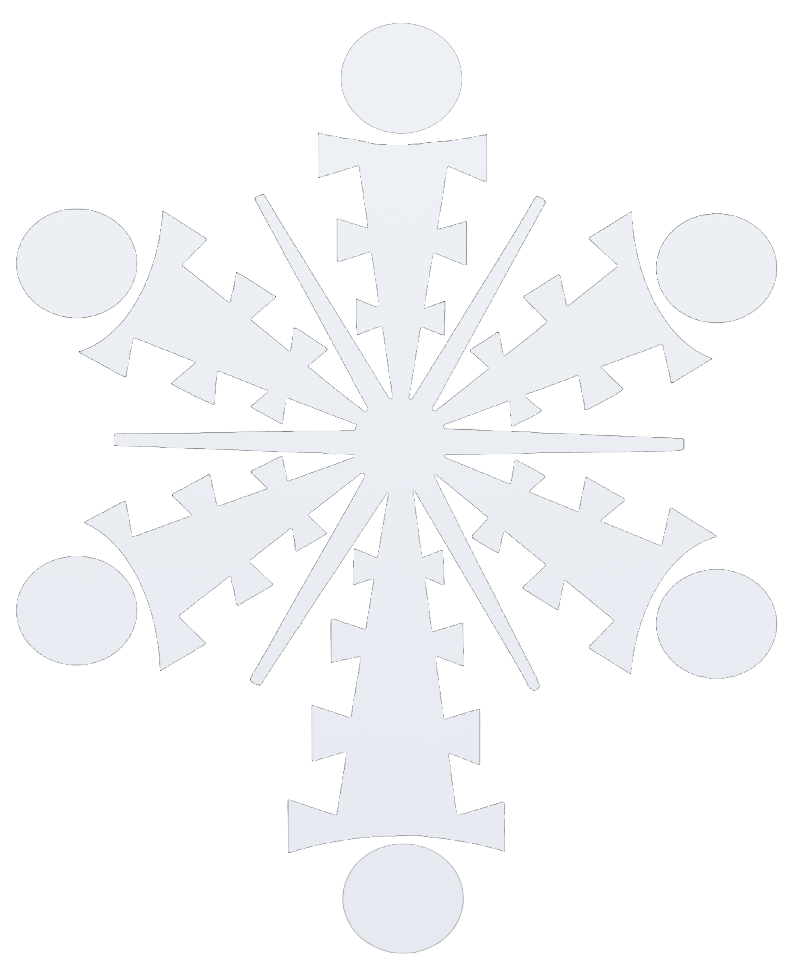
The Tibetan Eye Chart
Print this chart and place it at eye level at arm's length. Keep your head still and let only your eyes move. Begin at the center. Slowly trace outward along the radiating lines to each symbol at the edge, then return to center. Work your way around the full chart. Move slowly. Breathe. Repeat daily for two to five minutes.
[Insert Tibetan eye chart image here. The traditional chart features a central dot surrounded by radiating lines extending to symbols positioned at regular intervals around the outer circle, covering the full range of eye movement including diagonal directions that most people rarely use.]
The symbols at the outer edge are positioned to take the eyes into ranges of motion that ordinary daily life almost never requires. That's the point. The practice is not about what the symbols mean. It's about where they send your eyes.